1798
Kidd’s Birth
[Jefferson Kyle Kidd](entity:character-recall-character-jefferson-kyle-kidd-55e27d6ab8de) was born in [Georgia](entity:location-recall-location-1bd814dd8875). His life would carry him through several wars, the loss of his printing business, and decades of wandering before he met [Cicada](entity:character-recall-character-4674805f12a6).
1814
A Young Militiaman
At sixteen, Kidd joined the [Georgia](entity:location-recall-location-1bd814dd8875) militia during the [War of 1812](entity:time-recall-time-war-of-1812-df1b2965582d). The young men elected officers from among themselves, and Kidd cast his vote for [Captain Thompson](entity:character-recall-character-33995f81e019) without yet knowing what military service would demand.
March 27, 1814
The Rescue at Horseshoe Bend
At [Horseshoe Bend](entity:location-recall-location-3179fc41af00), [Captain Thompson](entity:character-recall-character-33995f81e019) crawled beyond the militia’s makeshift barricade and was struck by gunfire. Kidd crossed the exposed ground under fire, dragged him back, and discovered that he himself had been wounded in the hip.
1814–1815
Kidd Becomes a Runner
After the battle, Kidd was made a sergeant and sought out officers to learn the job. He later escaped prison-transport duties by joining the message corps, where carrying orders alone through the wilderness gave him a sense of purpose and freedom.
By 1815
The End of the War
Kidd carried dispatches across [Georgia](entity:location-recall-location-1bd814dd8875) and Alabama, sometimes on foot and sometimes on small Florida horses. When that work ended, he recognized that the solitary task he loved could not last forever; family obligations kept him from immediately heading west.
After the Texas Revolution
A Printer in Texas
After the [Texas Revolution](entity:event-recall-event-dda58cd1d1d9), Kidd left [Georgia](entity:location-recall-location-1bd814dd8875) for [Texas](entity:location-recall-location-texas-f19b16f8e87c) and settled in [San Antonio](entity:location-recall-location-san-antonio-9e69384c5ddf). He learned Spanish and built a printing business that served churches, merchants, and anyone who needed words fixed onto paper.
During Kidd’s years in San Antonio
Meeting Maria Luisa
Kidd first saw [Maria Luisa Betancort y Real](entity:character-recall-character-08299e323bd1) when she ran after a milkman who had passed her house without stopping. He helped her retrieve her shoe, and the encounter began a marriage and family that would become central to his memories.
1846
The Mexican War
During the [Mexican War](entity:event-recall-event-6ee7e5bf8a09), Kidd organized communications for [Zachary Taylor](entity:character-recall-character-16f14abb8b7b)’s forces and printed orders on a small hand press. He became a brevet captain, earning the title by which people would know him for the rest of his life.
1846
The Battle at Resaca de la Palma
At [Resaca de la Palma](entity:location-recall-location-ff2b87dafceb), a Mexican cannonball smashed through the staff tent near Kidd, shattering a table and killing a nearby major. Kidd survived the battle and continued his work coordinating messages and couriers.
February 1847
The Battle of Buena Vista
At [Buena Vista](entity:location-recall-location-390e0159e557), Kidd fired a flintlock from a wagon while hidden Mexican and Apache marksmen harried the American forces. Later, he told young [Texas Rangers](entity:organization-recall-organization-9202de18d0d3) about his earlier battles and advised them to look after one another because a person might be wounded without realizing it.
After the Mexican War
News as a Calling
Kidd came to believe that carrying information might help people understand distant conflicts and make them less eager to fight. Over time, he saw that audiences also needed stories of faraway places—news presented as a temporary refuge from their own troubles.
1861–1865
The Civil War’s Losses
[The U.S. Civil War](entity:event-recall-event-6c1cd2647518) destroyed Kidd’s finances and took the life of [Olympia](entity:character-recall-character-6cba85ea439f)’s husband at Adairsville. His printing business and investments disappeared, while his surviving family faced the ruin and shortages left across the South.
1863
The Johnson Family’s Journey
[Britt Johnson](entity:character-recall-character-britt-johnson-a4e0dc71b60a)’s family left Kentucky for [Texas](entity:location-recall-location-texas-f19b16f8e87c) with a party escaping both military war and violence between neighbors. Moses Johnson arranged Britt’s freedom papers before the group crossed the Mississippi, and Britt planned to make a new life as a freighter.
1864
A Captive Child
When the [Kiowa](entity:organization-recall-organization-kiowa-5ee11fc30b11) raided the Leonberger family near [Castroville](entity:location-recall-location-castroville-de2524624ea1), [Cicada](entity:character-recall-character-4674805f12a6) was taken at about six years old. Her parents and little sister were killed, and the child was absorbed into Kiowa life until her earlier German-speaking world faded from memory.
1864
Britt’s Family Is Taken
Britt’s wife and two children were captured during a raid. He rode out alone and brought them back, an experience that helped establish his reputation as a determined rescuer of captives.
October 1864
Mary and Britt’s Quarrel
A bitter argument erupted when Mary used the family’s freedom papers to teach the children arithmetic. Britt feared that the writing would make the papers seem invalid; Mary insisted the children needed to learn, and the quarrel exposed the pressures of their precarious life on the frontier.
After the 1864 quarrel
Britt’s Return to Freighting
Britt left to haul freight, with young Jim accompanying him. He tried to keep the family together even as Mary’s unhappiness and the danger of their isolated home made every journey feel uncertain.
After Maria Luisa’s death
Kidd Takes to the Road
After [Maria Luisa](entity:character-recall-character-maria-luisa-649ef6468b73) died, Kidd sold his printing business, paid his debts, and began traveling through [Texas](entity:location-recall-location-texas-f19b16f8e87c) to read newspapers aloud. His daughters remained in [Georgia](entity:location-recall-location-1bd814dd8875), while the road and his work became the structure of his life.
1869–early 1870
Cicada Is Returned to the Agent
Under pressure from the Indian Agent’s demand that captives be surrendered, the [Kiowa](entity:organization-recall-organization-kiowa-5ee11fc30b11) brought [Cicada](entity:character-recall-character-4674805f12a6) to [Fort Sill](entity:location-recall-location-fort-sill-a991617a6162). The Agent identified her as [Johanna Leonberger](entity:character-recall-character-johanna-leonberger-e0bcf30b4d42) and arranged for her relatives to pay for her return, even though the child understood herself as Kiowa.
1871, recalled later
The Rescuer’s Death
[Britt Johnson](entity:character-recall-character-britt-johnson-a4e0dc71b60a) and his freighting companions were killed by [Comanche](entity:organization-recall-organization-comanche-cc72884a1f1c) on a vulnerable stretch of road near Graham. Their deaths ended the work of a man whose daring had brought several captives back from the Plains.
February 26, 1870
The Fifteenth Amendment Reading
In [Wichita Falls](entity:location-recall-location-wichita-falls-1686f83e8f2a), Kidd read the news of the [Fifteenth Amendment](entity:rule-recall-rule-fifteenth-amendment-0bdabc81808a)’s ratification to a mostly white crowd. He bluntly insisted that the amendment extended voting rights to Black men, then moved on to reports of a polar expedition and scientific discoveries.
February 26, 1870
Britt Entrusts Him with Cicada
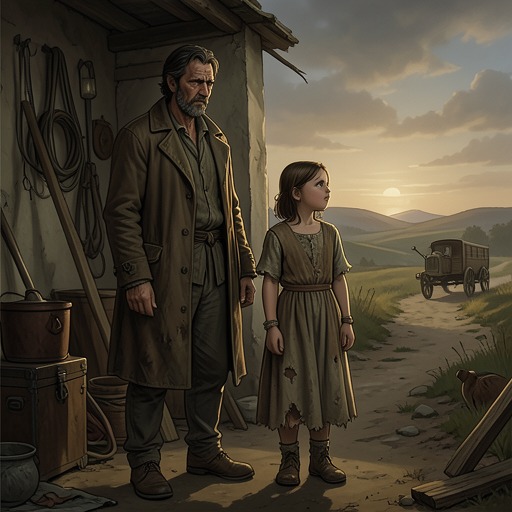
After the reading, Britt asked Kidd to take the girl south. He explained that the Agent had identified her as [Johanna Leonberger](entity:character-recall-character-johanna-leonberger-e0bcf30b4d42) and that her relatives had paid fifty dollars for her delivery, but Britt could not abandon his freight work for the long journey.
February 26, 1870
Kidd Accepts the Mission
Kidd hesitated, then agreed to take [Cicada](entity:character-recall-character-4674805f12a6) to her relatives near [San Antonio](entity:location-recall-location-san-antonio-9e69384c5ddf). Britt handed him the gold coin and warned him to be careful; Kidd understood that the girl regarded him with suspicion and contempt.
The night of February 26, 1870
A Forced Bath and New Clothes
Women in [Wichita Falls](entity:location-recall-location-wichita-falls-1686f83e8f2a) could not bring themselves to force the frightened child through a bath, so Kidd took her to Lottie’s establishment. The women there scrubbed her, removed the [Kiowa](entity:organization-recall-organization-kiowa-5ee11fc30b11) clothes and feathers, and dressed her in clothes she did not understand.
Late February 1870
The Curative Waters Wagon
Kidd spent the gold on a small excursion wagon painted with the name [Curative Waters](entity:expression-recall-expression-curative-waters-75fdb7f5bbdb). It gave him a way to keep [Cicada](entity:character-recall-character-4674805f12a6) in sight and carry the supplies needed for a journey of hundreds of miles.
Late February 1870
Britt’s Farewell
Before the wagons separated, Britt inspected Kidd’s obsolete revolver and exchanged it for a Smith & Wesson, warning him to watch his right side. Kidd set off east while Britt and his crew took their freight wagons south.
Late February 1870
The Flooded Little Wichita
Kidd and [Cicada](entity:character-recall-character-4674805f12a6) crossed the swollen Little Wichita River at a gallop. The wagon briefly floated in the current before the mare found firm ground, while Kidd’s saddle horse plunged across after them.
The first days of the journey
Names on the Road
Kidd tried to show [Cicada](entity:character-recall-character-4674805f12a6) that he carried weapons for protection, then began teaching her names through gestures. She offered her [Kiowa](entity:organization-recall-organization-kiowa-5ee11fc30b11) name, Cicada, and learned that he was the Captain, beginning their fragile, practical language together.
Late February 1870
The First Camp
At camp, Kidd demonstrated his small stove and cooked bacon and corn bread. [Cicada](entity:character-recall-character-4674805f12a6) watched closely, touched the hot stove, and sang over her food; Kidd began to see how much of her knowledge came from a world unlike his own.
On the road to Spanish Fort
The Army Patrol
A U.S. Army patrol stopped Kidd and demanded papers and information about his weapons. [Cicada](entity:character-recall-character-4674805f12a6) hid beneath her blanket and seized the revolver, believing Kidd might surrender her; he stood between her and the officer and insisted he was taking her to her relatives.
After the Army patrol
A New Trust
Once the patrol rode away, [Cicada](entity:character-recall-character-4674805f12a6) came to sit beside Kidd with the revolver in her hand. She made signs meaning that he had let her go free, and he carefully took the weapon back without diminishing the trust she had just begun to offer.
Late February 1870
Spanish Fort
At [Spanish Fort](entity:location-recall-location-120d2815e75e), floodwaters and freight traffic made the town feel crowded and dangerous to [Cicada](entity:character-recall-character-4674805f12a6). Kidd camped outside town beneath oak trees, set the horses to graze, and tried to provide a quiet place amid the storm and confusion.
That evening in Spanish Fort
Simon and Doris Join the Camp
Kidd asked [Simon Boudlin](entity:character-recall-character-0af98fc6ff1a) and [Doris Dillon](entity:character-recall-character-faa3752d0b15) to watch [Cicada](entity:character-recall-character-4674805f12a6) while he gave a reading. Doris brought a china-headed doll, which Cicada treated as a sacred figure; Doris understood that the child had been remade by captivity and could not simply be returned to her earlier self.
That evening in Spanish Fort
Doris Offers to Keep Her
Moved by [Cicada](entity:character-recall-character-4674805f12a6)’s losses, Doris offered to take her in. Kidd refused because he had accepted the payment and made a promise to return the girl to her relatives, while [Simon](entity:character-recall-character-simon-99ba1396ec7a) showed clear relief at not being asked to raise a child immediately.
Late February 1870
A Reading in Spanish Fort
Kidd read reports about Europe, India, and the lost polar ship Hansa, drawing the listeners briefly away from their own hardship. As he finished, [Simon](entity:character-recall-character-simon-99ba1396ec7a) brought word that [Cicada](entity:character-recall-character-4674805f12a6) had disappeared from camp.
That night in Spanish Fort
The Red River Escape
Following [Cicada](entity:character-recall-character-4674805f12a6)’s bare footprints through the rain, Kidd and [Simon](entity:character-recall-character-simon-99ba1396ec7a) found her standing at the flooded [Red River](entity:location-recall-location-red-river-7da40dc09799). Across the water, [Kiowa](entity:organization-recall-organization-kiowa-5ee11fc30b11) families had stopped with their horses and travois, and Cicada called to them, hoping to return to the life she remembered.
During the Red River escape attempt
The Warning Shot
A warrior on the far bank fired toward the stone near [Cicada](entity:character-recall-character-4674805f12a6), warning the strangers away. Kidd and [Simon](entity:character-recall-character-simon-99ba1396ec7a) pulled her back as she placed her doll facing the river, a gesture that marked how fully she still belonged to the people she could not reach.
Early March 1870
The Journey Continues
Unable to cross the flooded river and return to the [Kiowa](entity:organization-recall-organization-kiowa-5ee11fc30b11), [Cicada](entity:character-recall-character-4674805f12a6) resumed the journey south with Kidd. When he tried German words for her aunt and uncle, she recognized them and remembered that her parents were dead.
Early March 1870
The First English Lessons
Kidd taught [Cicada](entity:character-recall-character-4674805f12a6) simple English words for hands, horses, and praise. She repeated them in her own clipped pronunciation, and the lessons gave them a shared activity while revealing that fragments of her earlier language remained buried in memory.
Early March 1870
Dallas and Mrs. Gannet
In [Dallas](entity:location-recall-location-dallas-bff7e73ac6cf), Kidd left [Cicada](entity:character-recall-character-4674805f12a6) with [Mrs. Gannet](entity:character-recall-character-d3534ab7289d) while he bought papers, arranged a reading, and visited a printing office. The city frightened the girl, but she took comfort in the horses and gradually began to trust the woman who looked after her.
Early March 1870
Food and the Fork
[Cicada](entity:character-recall-character-4674805f12a6) tried to eat barbecue with her hands, and Kidd attempted to teach her to use a fork. She rejected the unfamiliar utensil and wept, making clear that even an ordinary meal could remind her how thoroughly the white world had made her a stranger.
That night in Dallas
A Night of Singing
[Mrs. Gannet](entity:character-recall-character-d3534ab7289d) stayed with [Cicada](entity:character-recall-character-4674805f12a6) after the girl began chanting and sobbing in the hotel room. She shared candy with her and sang hymns and folk songs until the child settled, while Kidd tried to write to his daughters and worried about the dangers of the road ahead.
Early March 1870
Almay’s Offer
After a [Dallas](entity:location-recall-location-dallas-bff7e73ac6cf) reading, [Almay](entity:character-recall-character-852c93b1c91c) approached Kidd and offered to buy [Cicada](entity:character-recall-character-4674805f12a6), making plain that he intended to exploit her. Kidd concealed his revulsion, pretended to bargain, and arranged a meeting for the next morning so he could gain time to escape.
Night of March 5, 1870
Escape from Dallas
Kidd rushed to fetch [Mrs. Gannet](entity:character-recall-character-d3534ab7289d) and [Cicada](entity:character-recall-character-4674805f12a6), and the three left [Dallas](entity:location-recall-location-dallas-bff7e73ac6cf) before [Almay](entity:character-recall-character-852c93b1c91c) could find them. He chose the Waxahachie Road rather than the route Almay expected, hoping to gain several hours on the pursuers.
At first light after leaving Dallas
The Brazos Ambush
Near [Carlyle Springs](entity:location-recall-location-ab2e1d27bba9), Kidd climbed above the road to hide the wagon and watch for [Almay](entity:character-recall-character-852c93b1c91c). Shots struck the wagon and the stone around him; [Cicada](entity:character-recall-character-4674805f12a6) crawled to safety beneath the vehicle while Kidd realized that the pursuit had become an attempt to kill him and seize her.
The day after the shoot-out
Crossing the Brazos
Kidd and [Cicada](entity:character-recall-character-4674805f12a6) gathered their scattered supplies and descended from the rocks with the horses and wagon intact. They crossed the Brazos without a ferry and continued south, both physically battered but alive.
The morning after the crossing
A Quiet Morning After
Kidd woke to a neat camp and [Cicada](entity:character-recall-character-4674805f12a6) urging him to eat. As she played in the stream, he reflected that life might be a message carried by hand, its meaning unknown until it was finally delivered.
Early March 1870
Learning Together
As they traveled, [Cicada](entity:character-recall-character-4674805f12a6) learned more English and began counting, naming objects, and reading the hands of Kidd’s watch. Kidd wondered what would happen when the wandering ended and she was expected to live inside a fixed household among people she barely remembered.
Early March 1870
The Standoff at Durand
Near [Durand](entity:location-recall-location-durand-d4dcc1550aa3), armed men stopped Kidd and asked his political allegiance. They had taken authority into their own hands in the absence of local government, demanded a half-dollar, and illustrated the lawless instability of Reconstruction-era [Texas](entity:location-recall-location-texas-f19b16f8e87c).
That evening in Durand
The Mercantile Reading Riot
At Kidd’s reading in the mercantile, partisan accusations about [Governor Davis](entity:character-recall-character-governor-davis-75de220f3892) and the state’s politics overwhelmed the news from abroad. The gathering erupted into a fight that wrecked the store and scattered the admission money.
After the Durand riot
Calley Makes Amends
[John Calley](entity:character-recall-character-john-calley-ad82a4a572ea) helped Kidd gather the scattered coins and regretted that his relatives had extorted money from him on the road. Kidd offered Calley a thought about law and justice, and the young man’s desire for honest work began to emerge.
The night they left Durand
The Chickens and the Apology
[Cicada](entity:character-recall-character-4674805f12a6) secretly killed and dressed two chickens from the broom-maker’s yard, treating them as food rather than someone else’s property. Kidd later arranged for money to be returned, troubled by the theft, while Cicada comforted him when she saw him crying.
Mid-March 1870
Warnings from the Cowboys
Traveling toward [Lampasas](entity:location-recall-location-lampasas-7ff10a1cd8bc), Kidd met cowboys who warned him about raids in the hill country and about the [Horrell brothers](entity:character-recall-character-horrell-brothers-bdcd8ac629af). They urged him to avoid the brothers’ saloon, where the men expected to hear themselves celebrated in the newspapers.
Mid-March 1870
The Horrell Brothers at the Springs
The [Horrell brothers](entity:character-recall-character-horrell-brothers-bdcd8ac629af) found Kidd and demanded to know why they were absent from the news. Kidd refused to promise a reading about their violence; the brothers nevertheless kept watch nearby, and Kidd and [Cicada](entity:character-recall-character-4674805f12a6) left before dawn.
During the journey through the Texas Hill Country
A Kiowa Encounter
One night, a blond young man and several companions dropped from an oak and swam across the stream. Kidd feared [Cicada](entity:character-recall-character-4674805f12a6) might call out to them, but she put a hand on his arm and shook her head; the group slipped away without violence.
March 1870
Readings in Fredericksburg
In [Fredericksburg](entity:location-recall-location-fredericksburg-4b4a7531a7af), Kidd and [Cicada](entity:character-recall-character-4674805f12a6) stayed at a hotel and ate a German supper together. At the community church, Cicada collected the admission dimes, announcing the price with new confidence as Kidd read reports from distant places.
Late March 1870
The Last Miles to Bandera
At [Bandera](entity:location-recall-location-bandera-2733157f9dcc), Kidd gave another reading to earn enough for the remaining journey. [Cicada](entity:character-recall-character-4674805f12a6) managed the paint can at the door and insisted that visitors pay, treating the coins as both money and a reminder of the ammunition that had saved them.
Near Castroville, late March 1870
Cicada’s Farewell to the Doll
As they neared [Castroville](entity:location-recall-location-castroville-de2524624ea1), [Cicada](entity:character-recall-character-4674805f12a6) asked about the china-headed doll she had left by the [Red River](entity:location-recall-location-red-river-7da40dc09799), where it faced her [Kiowa](entity:organization-recall-organization-kiowa-5ee11fc30b11) homeland. Kidd told her there would be no more readings or wandering; she understood that their shared road was ending and wept.
Early April 1870
The Leonberger Graves
In [D’Hanis](entity:location-recall-location-d-hanis-c0f16712e797), Kidd and [Cicada](entity:character-recall-character-4674805f12a6) stood before the graves of her parents and little sister. Cicada asked to return to [Dallas](entity:location-recall-location-dallas-bff7e73ac6cf) and said she did not like the place, but Kidd kept his promise and continued toward her relatives’ farm.
Early April 1870
The Reunion at the Farm
Kidd brought [Cicada](entity:character-recall-character-4674805f12a6) to Wilhelm and [Anna Leonberger](entity:character-recall-character-anna-leonberger-79320b0dacb9), who questioned him about the wagon and the money before turning their attention to the child. Cicada recognized the German words for aunt and uncle, but she clung to the harness and appeared frightened rather than joyful.
The day after the reunion
The Family’s Expectations
Wilhelm and Anna expected [Cicada](entity:character-recall-character-4674805f12a6) to learn their household’s ways and contribute to the work. She hid in the barn while neighbors came to celebrate her return, and when they tried to speak to her, she resisted them from above with farm tools.
During the D’Hanis celebration
A Warning from Adolph
Adolph told Kidd that the Leonbergers had not adopted their nephew and probably would not legally adopt [Cicada](entity:character-recall-character-4674805f12a6), since adoption would obligate them to support her and provide for her future. Kidd understood that the celebration did not guarantee the child’s welfare.
April 1870
Kidd Leaves D’Hanis
Kidd left the farm and returned toward [San Antonio](entity:location-recall-location-san-antonio-9e69384c5ddf), unable to see a legal or practical way to intervene. He carried the knowledge that [Cicada](entity:character-recall-character-4674805f12a6) might be unwanted into the same household that had celebrated her return.
April 1870
San Antonio Revisited
Kidd returned to [San Antonio](entity:location-recall-location-san-antonio-9e69384c5ddf), where familiar streets, river sounds, and his old print shop brought [Maria Luisa](entity:character-recall-character-maria-luisa-649ef6468b73) vividly back to mind. He learned that his daughters hoped to return from [Georgia](entity:location-recall-location-1bd814dd8875) but lacked the money and means for the journey.
April 1870
The Land and the Law
Kidd visited his old lawyer and asked about returned captives, adoption, and the possibility of reviving his printing business. The lawyer explained that children belonged to their parents or guardians, leaving Kidd with few clear legal avenues to protect [Cicada](entity:character-recall-character-4674805f12a6).
The night after leaving San Antonio
Kidd Returns for Cicada
Kidd rode back to the Leonberger farm and saw [Cicada](entity:character-recall-character-4674805f12a6) sent into the dark alone to fetch horses and carry their feed. Her arms bore red marks from a dog whip, and she offered corn for Pasha as a way to make herself welcome to Kidd.
That night in D’Hanis
Cicada Chooses the Road
Kidd told [Cicada](entity:character-recall-character-4674805f12a6) to drop the heavy bucket and leave with him. She ran to the wagon, declared that she would go with him, and they turned north together; Kidd warned that anyone who objected could face another shower of ten-cent pieces.
1877
The Horrells’ Later Fame
The [Horrell brothers](entity:character-recall-character-horrell-brothers-bdcd8ac629af) continued their violent career until several were killed in the [Lampasas Square Shoot-Out](entity:event-recall-event-lampasas-square-shoot-o-e5053d530707). At last, the men who had wanted to see their names in eastern newspapers became news through the violence that ended their spree.
After 1871
Britt’s Companions Remembered
[Britt Johnson](entity:character-recall-character-britt-johnson-a4e0dc71b60a) and his companions were buried where they fell, and their deaths became part of the frontier’s remembered violence. Their story remained tied to the rescue work that had brought [Cicada](entity:character-recall-character-4674805f12a6) into Kidd’s care.
The years after 1870
A Life Back on the Road
Kidd and [Cicada](entity:character-recall-character-4674805f12a6) traveled across [Texas](entity:location-recall-location-texas-f19b16f8e87c) again, sometimes with freighters or soldiers. He read the news in small towns while she collected admission money, learned English, and slowly became part of his daily life.
Later in the 1870s
The End of the Indian Wars
The U.S. Army drove the remaining [Comanche](entity:organization-recall-organization-comanche-cc72884a1f1c) and [Kiowa](entity:organization-recall-organization-kiowa-5ee11fc30b11) to [Palo Duro Canyon](entity:location-recall-location-palo-duro-canyon-fc178b8a7985), bringing the Indian Wars toward their end. Kidd and [Cicada](entity:character-recall-character-4674805f12a6) continued traveling through a still-volatile [Texas](entity:location-recall-location-texas-f19b16f8e87c), reading about a rapidly changing world.
About three years after the journey
The Return of Kidd’s Family
Kidd’s daughters and their families eventually returned to [San Antonio](entity:location-recall-location-san-antonio-9e69384c5ddf). Emory established a print shop, [Olympia](entity:character-recall-character-6cba85ea439f) remarried, and [Elizabeth](entity:character-recall-character-elizabeth-83df578df81e) pursued the complicated land claims connected to the family’s Spanish inheritance.
After his family returned
Kidd and Cicada Settle
Kidd finally left the roads and lived with [Elizabeth](entity:character-recall-character-elizabeth-83df578df81e), Emory, and their children. [Cicada](entity:character-recall-character-4674805f12a6) tried to fit into white society, learning its clothes and manners, but she longed for the openness of the world she had known with the [Kiowa](entity:organization-recall-organization-kiowa-5ee11fc30b11).
When Cicada was about fifteen
Calley Visits the Captain
[John Calley](entity:character-recall-character-john-calley-ad82a4a572ea) came to [San Antonio](entity:location-recall-location-san-antonio-9e69384c5ddf) to visit Kidd and met [Cicada](entity:character-recall-character-4674805f12a6) at the door. She did not recognize the young man whose taffy she had once slapped away, but Calley remembered her and began visiting again.
During Calley’s visits
Songs at the Piano
Calley played songs at the family piano and taught them to [Cicada](entity:character-recall-character-4674805f12a6) one note at a time. She joined him at the bench, and an easy intimacy grew between them as Kidd watched their connection take shape.
Before their marriage
Calley’s Cattle Work
Calley chose to gather wild cattle in the dangerous [Nueces Strip](entity:location-recall-location-nueces-strip-e3384b237e7f), hiring experienced men and branding the animals he collected. The work brought him money and standing, and made it possible for him to build a future with [Cicada](entity:character-recall-character-4674805f12a6).
January, after Calley’s cattle drives
Cicada’s Wedding Day
Before the wedding, [Cicada](entity:character-recall-character-4674805f12a6) sat with Kidd, frightened by the unfamiliar future and unsure how to be married. Kidd joked about not scalping anyone or stealing chickens, then tried to reassure her that she and Calley would find their way together.
January, on Cicada’s wedding day
Kidd Gives Her the Watch
[Cicada](entity:character-recall-character-4674805f12a6) checked Kidd’s watch and announced that it was time to go. As she embraced him, she called him her curative waters; Kidd gave her the watch and told her she was his dearest little warrior, struggling to let her leave his care.
After the wedding
A Life on the Cattle Trail
[Cicada](entity:character-recall-character-4674805f12a6) joined Calley on cattle drives, including a journey to Missouri. She found a life of movement she could love, and the two remained together through the coming years, raising children and living into the age of airplanes.
Kidd’s old age
Kidd’s Final Message
Kidd worked on his [Kiowa](entity:organization-recall-organization-kiowa-5ee11fc30b11) dictionary until he could no longer see well. He asked to be buried with the runner’s badge he had carried since 1814, still thinking of himself as a messenger charged with an unknown message.
At the close of Kidd’s life
The Stories Remembered
Kidd remembered [Cicada](entity:character-recall-character-4674805f12a6)’s war cry at the Brazos as a sound of genuine courage, not a childish performance. The story of her [Kiowa](entity:organization-recall-organization-kiowa-5ee11fc30b11) life endured alongside the stories of the warriors and rescuers whose paths had crossed hers.